
Are you trying to create a wearable adult product that customers will love? Many brands struggle with designs that are bulky, loud, or uncomfortable, leading to poor reviews. Success in this category depends on mastering the delicate balance between powerful pleasure, all-day comfort, and ultimate discretion.
To create a successful wearable adult toy, you must prioritize three key areas in your design and manufacturing process. First, select body-safe, flexible silicone for comfort. Second, design the product with ergonomic principles for a secure, barely-there fit. Finally, engineer the motor and casing to minimize noise, ensuring the user feels confident wearing it anywhere. This focus on materials, shape, and sound is what separates a bestseller from a flop.
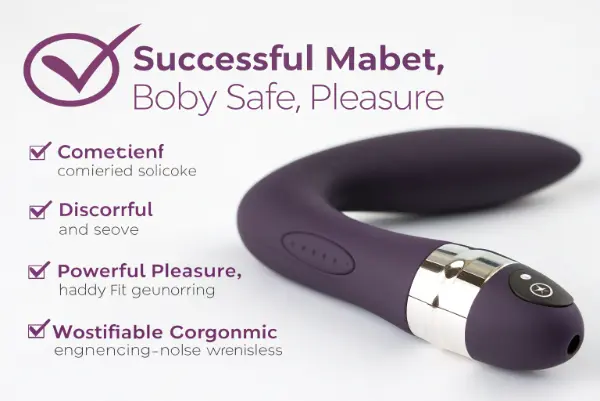
As a manufacturer, I’ve seen countless wearable concepts come across my desk. The ones that truly succeed are those that understand the user’s needs on a deep level. It’s not just about creating a vibrator you can wear; it’s about creating an experience that integrates seamlessly into someone’s life. This requires a different approach to design, one that goes beyond pure function and ventures into the realm of human-centered engineering. Let’s explore what that looks like in practice.
How Do You Choose the Right Materials for Wearable Comfort?
Your customers want a wearable toy that feels like a second skin, not a piece of hardware. But choosing the wrong material can lead to discomfort, irritation, and negative reviews for your brand. Finding that perfect balance between softness, durability, and body safety can feel like a huge challenge.
The best material for a comfortable wearable toy is high-grade, platinum-cured silicone. This material is hypoallergenic, non-porous, and exceptionally soft and flexible, mimicking the feel of skin. It holds its shape for a secure fit but flexes with the body’s movements, providing comfort for extended wear. It is also durable and easy to clean, which gives customers peace of mind and builds trust in your brand’s quality.
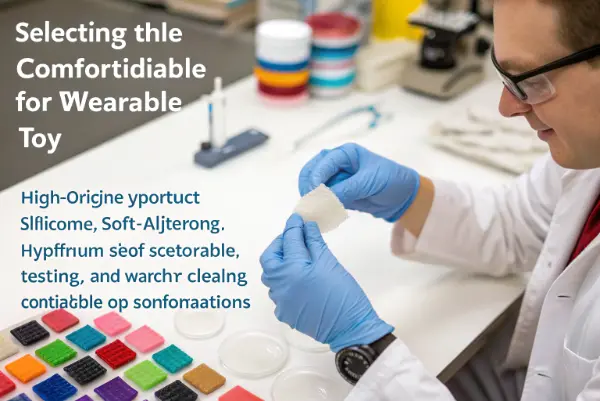
When I first started in this industry, we experimented with many materials. I remember one early prototype made from a thermoplastic elastomer (TPE). While it was cheap, it just didn’t have the right feel. It was slightly porous and had a faint chemical smell that we couldn’t eliminate. We knew right away this wouldn’t work for a product meant for intimate, extended use. This experience taught me a valuable lesson: for wearables, you can’t compromise on the primary material. That’s why we now exclusively recommend platinum-cured silicone. It’s the gold standard for a reason.
Comparing Common Materials
Silicone is the clear winner, but it’s helpful to see why. Brand owners often ask me about other options, usually to save costs. Here’s a breakdown I often share to clarify the trade-offs.
| Material | Comfort & Feel | Body Safety | Durability | Cost |
|---|---|---|---|---|
| Platinum-Cured Silicone | Excellent (soft, silky) | Excellent (hypoallergenic) | Excellent | High |
| TPE/TPR | Good (soft but can be sticky) | Fair (can be porous) | Fair | Low |
| ABS Plastic | Poor (rigid, hard) | Good (non-porous) | Excellent | Medium |
| Jelly (PVC) | Poor (can be firm) | Poor (contains phthalates) | Poor | Very Low |
Beyond the Basics: Shore Hardness
Even within silicone, there are choices to make. The most important is "shore hardness," which measures how soft or firm the material is. For a wearable, you want a low shore rating. This makes the product soft and pliable, so it can adapt to the body’s unique curves and movements. A firmer silicone might be better for an internal dildo, but for a wearable that sits against the body, softness is paramount for long-term comfort. We often create multiple prototypes with slightly different shore hardness ratings so a brand can test them and find the perfect feel for their target audience.
What Makes a Wearable Toy Truly Ergonomic and Secure?
You’ve designed a beautiful wearable toy, but customers complain it falls out or shifts uncomfortably. A product that requires constant adjustment is frustrating and ruins the discreet experience you promised. The challenge is creating a single shape that fits a wide variety of body types securely and comfortably.
A truly ergonomic wearable toy combines a contoured shape, flexible structure, and strategic weight distribution. The design should follow the natural curves of the body, often using a C-shape or U-shape. Flexible "wings" or arms help it adapt to different anatomies. Most importantly, the main body containing the motor must be shaped to rest securely against the pubic bone, using it as an anchor to prevent slipping during movement.
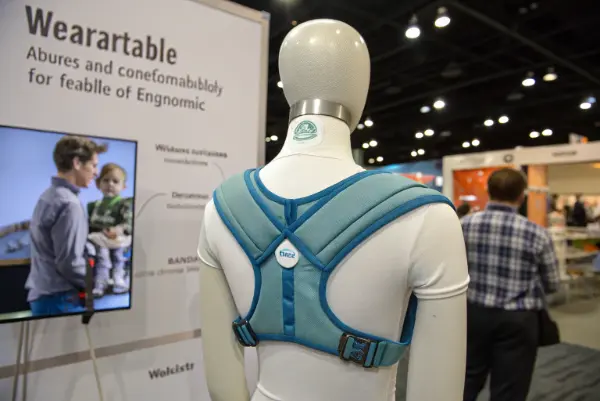
I’ve learned that you can’t design a wearable toy on a computer screen alone. It needs to be tested on actual bodies. We had a client who was adamant about a particular shape because it looked sleek and modern. In 3D renders, it was beautiful. But when we created the first physical prototype, we found it was unstable. It looked good, but it didn’t feel good or stay in place. We went back to the drawing board and focused on anatomy first. We added a wider, more curved internal arm and a slightly broader external arm. The final product wasn’t as minimalist as the original concept, but it was incredibly secure and comfortable, and it became their bestseller.
Key Principles of Ergonomic Design
To ensure a wearable product is both secure and comfortable, we focus on a few core principles during the development phase. These are non-negotiable for a successful product.
-
Anatomical Contouring: The product’s shape must complement the human body, not fight against it. For clitoral vibrators, this means a shape that tucks neatly between the labia and rests against the pubic bone. We use anatomical models and data to guide the initial shaping process, ensuring the curves are in the right places.
-
Flexibility and Adaptability: No two bodies are the same. A rigid product will only fit a small percentage of users. We build flexibility into the arms or wings of the wearable. This allows it to gently hug the body and adjust to different sizes and shapes, providing a custom-like fit for a wider range of customers.
-
Weight Balancing: The placement of the motor and battery is critical. If the weight is poorly distributed, the toy will feel insecure and be prone to slipping. We aim to concentrate the weight in the part of the toy that can be anchored against the body, using gravity to help hold it in place rather than pull it out. This makes it feel much more stable, even when walking or moving around.
How Can You Make a Wearable Vibrator Discreet Enough for Use Anywhere?
Your customers are drawn to the idea of a wearable vibrator they can use outside the bedroom. But if the toy is too loud, it creates anxiety instead of pleasure, and your product will be left in a drawer. The main problem is that powerful motors naturally create noise and vibration.
To ensure discretion, you must decouple the motor from the outer casing and use sound-dampening materials. The motor should be suspended in a soft silicone cradle inside the main shell, preventing vibrations from turning the entire product into a sound amplifier. Encasing this assembly in a thick, seamless layer of high-quality silicone further muffles the sound, making the vibrations powerful for the user but nearly silent to anyone nearby.
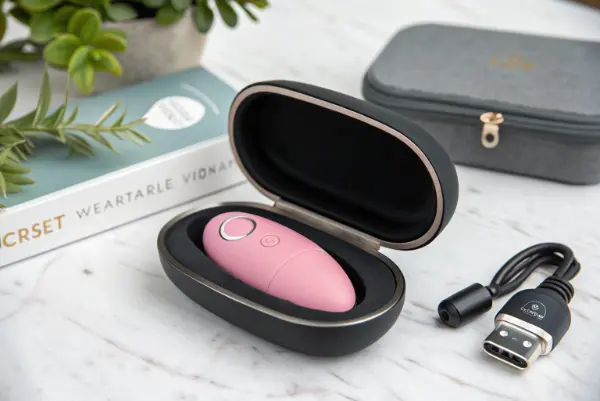
I remember a major challenge we faced with one of our first wearable designs. The motor was incredibly powerful, which we thought was a great selling point. But it was also loud. The vibrations traveled directly through the hard plastic inner shell to the outer silicone layer, and it buzzed like a hornet. Our solution was a complete redesign of the internal structure. We created a tiny silicone "hammock" to hold the motor, isolating it from the rigid components. It was a complex change, but the difference was night and day. The final product was just as powerful, but the audible noise dropped by over 60%.
Techniques for Noise Reduction
Achieving whisper-quiet operation is an engineering art form. It’s not about one single trick, but a combination of several techniques working together.
-
Motor Decoupling: This is the most important step. The motor should never be in direct contact with the hard plastic frame of the toy. By placing it inside a separate, soft silicone pocket, we create a buffer. The vibrations are transferred to the user where intended, but the sound-causing vibrations are absorbed before they can resonate through the product’s body.
-
Seamless, Thick Outer Shell: Any seams or gaps in the outer shell can be a source of noise. A single, unbroken piece of silicone is best. Furthermore, the thickness of this silicone matters. A thicker wall provides more mass to absorb sound waves. We work with brands to find the right balance between a thick, quiet shell and a sleek, unobtrusive design.
-
Optimizing Motor Frequency: Not all vibrations are created equal. High-frequency "buzzy" vibrations tend to create more audible noise than low-frequency "rumbly" vibrations. We can work with motor suppliers to select motors that operate in a lower frequency range. While still feeling incredibly powerful, these rumbly motors are naturally quieter and often perceived as more pleasurable by users. This small choice can have a huge impact on the final product’s discretion.
How Do You Prototype and Test Wearables for Real-World Performance?
You have a great design on paper, but you have no idea if it will actually be comfortable, secure, or discreet in the real world. Rushing a product from a 3D model directly to mass production is a huge gamble that often results in costly failures and unhappy customers.
Effective prototyping involves a multi-stage process. Start with non-functional 3D-printed models to test the shape and ergonomics. Then, create a small batch of fully functional prototypes using the final materials, like platinum-cured silicone. These should be distributed to a diverse group of testers for feedback on comfort, security during movement, noise levels, and control usability. This iterative feedback loop is crucial for refining the design before committing to expensive mass production molds.
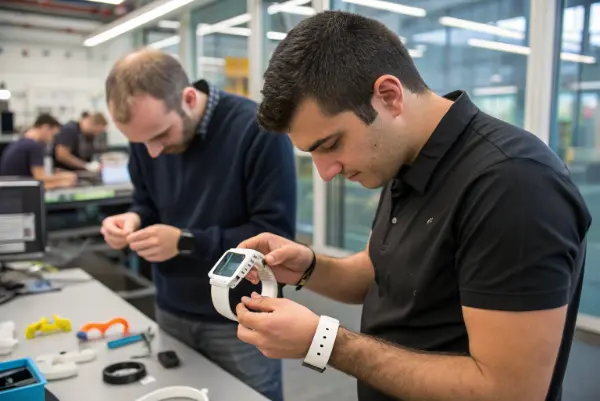
There’s a story I often tell my clients about a brand that skipped real-world testing. They were so confident in their CAD design that they paid for production molds immediately. When the first batch of 5,000 units arrived, they discovered a major flaw: the magnetic charging port was too weak and would disconnect with the slightest movement. They had tested the charging on a desk, but not while being worn. It was a devastatingly expensive mistake that could have been caught with a simple, ten-person tester panel. This is why I always insist on a rigorous testing phase. It’s not a delay; it’s insurance.
A Structured Testing Protocol
To avoid these pitfalls, we guide our clients through a structured testing process. This ensures all aspects of the product are vetted before the big investment in tooling is made.
-
Phase 1: Form & Fit (Non-Functional Prototypes):
- Goal: To test the ergonomics, size, and shape.
- Method: We use rapid 3D printing to create several variations of the product shape from an inexpensive, rigid material. These "dummies" are not functional but can be held and fitted to the body to assess the basic comfort and feel of the shape. This is the fastest and cheapest way to identify major ergonomic flaws early on.
-
Phase 2: Functional Prototype Testing:
- Goal: To test comfort, security, noise, and controls in a real-world setting.
- Method: We create a small batch (10-20 units) of fully functional prototypes using soft silicone molds. These look and feel almost identical to the final product. We then help the brand create a detailed feedback questionnaire for their testers. Testers are asked to wear the product while walking, sitting, and exercising, and to rate aspects like:
- Security: Did it stay in place?
- Comfort: Any pinching or pressure points after an hour?
- Discretion: Could a partner hear it in a quiet room?
- Controls: Was the app easy to use? Were the buttons easy to find?
-
Phase 3: Final Revisions:
- Goal: To implement feedback and finalize the design.
- Method: We collect and analyze all the feedback from the testers. Based on this data, we make final adjustments to the CAD model. This might mean changing a curve by a few millimeters, thickening a silicone wall, or adjusting button placement. Only after the design has been perfected through this feedback loop do we proceed to create the final steel molds for mass production.
Conclusion
Creating a successful wearable adult toy comes down to a deep focus on the user’s experience. By prioritizing body-safe materials like platinum-cured silicone, obsessing over ergonomic and secure shapes, and engineering for whisper-quiet discretion, you can build a product that your customers will genuinely love and trust.