
You run out of lubricant in the heat of the moment and grab the jar of Vaseline from the nightstand. It seems like a quick fix, but you might be setting yourself up for discomfort, infections, and ruined products. Many people make this mistake without knowing the consequences.
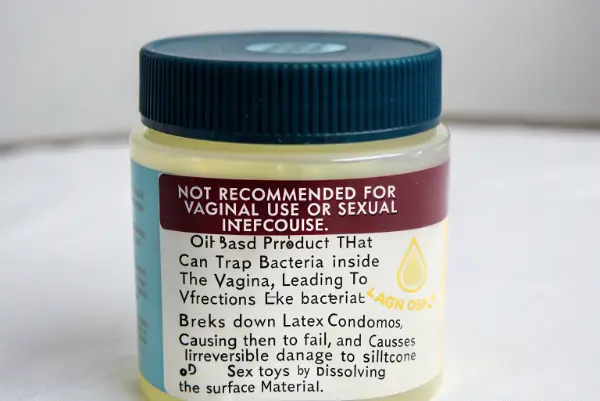
Petroleum jelly is not recommended for vaginal use or sexual intercourse. It is an oil-based product that can trap bacteria inside the vagina, leading to infections like Bacterial Vaginosis. Furthermore, it breaks down latex condoms, causing them to fail, and causes irreversible damage to silicone sex toys by dissolving the surface material.
Many people assume that because a product is safe for babies or dry lips, it is safe for everywhere else. However, the internal balance of the body is delicate. In this article, I will explain why this household staple is dangerous for intimate health and why, as a brand owner, you need to educate your customers to protect your products.
Why do consumers mistakenly use petroleum jelly for sex?
We have all heard stories or seen movies where someone grabs a household item to use as a lubricant. It is easy to find, very cheap, and sits in almost every bathroom cabinet. This convenience often overrides safety concerns for many users.
People use petroleum jelly because it is accessible, inexpensive, and has a thick texture that lasts a long time without drying out. Many consumers lack proper education on intimate health and assume that if a product is "non-toxic" and safe for external skin, it must be safe for internal use as well.
As someone who has worked in the adult product manufacturing industry for years, I see this misunderstanding happen constantly. Consumers buy a high-quality toy from my clients, but then they pair it with the wrong lubricant. They do this because they do not understand the difference between skin and mucous membranes. The skin on your arm is tough and acts as a barrier. The tissue inside the vagina is a mucous membrane. It is absorbent and self-cleaning.
When you put something thick and heavy like petroleum jelly on external skin, it creates a seal to keep moisture in. That is great for cracked heels. But when you put that same seal inside the vagina, it locks in everything that should be coming out. It traps heat, sweat, and bad bacteria. The texture is also much harder to clean than standard lubricants. Water-based lubes rinse off with water. Petroleum jelly repels water. This means it stays inside the body for days, interfering with the body’s natural cleaning process. This basic misunderstanding of biology and chemistry drives a lot of bad user experiences.
| Feature | Water-Based Lube | Petroleum Jelly |
|---|---|---|
| Solubility | Water-soluble (washes off easily) | Insoluble (hard to wash off) |
| Barrier Effect | Breathable | Occlusive (traps bacteria) |
| Condom Safety | Safe for Latex | Destroys Latex |
| Texture | Slick, mimics natural fluids | Thick, greasy, sticky |
What are the specific health risks linked to petroleum jelly?
Using the wrong product can turn a pleasurable experience into a medical issue very quickly. Women often experience itching, unusual discharge, or strong odors after using oil-based products. These are not just minor annoyances; they are signs of an imbalanced ecosystem.
The primary risk is Bacterial Vaginosis (BV), which occurs when the jelly traps bacteria against the vaginal walls. Other risks include yeast infections due to trapped moisture and the increased risk of STIs or pregnancy because petroleum jelly dissolves latex condoms, causing them to break during intercourse.

Let’s look at this from a manufacturing and chemical safety perspective. Bacterial Vaginosis (BV) is the most common vaginal infection in women ages 15 to 44. It happens when there is too much of a certain bacteria in the vagina. This changes the normal balance of bacteria in the vagina. A study published in the journal Obstetrics & Gynecology found a very strong link here. They discovered that women who used petroleum jelly intravaginally were more than twice as likely to test positive for bacterial vaginosis.
Why does this happen? The vagina has its own delicate pH balance and a microbiome dominated by lactobacilli. These good bacteria produce acid to keep bad bacteria away. Petroleum jelly is stubborn. It is a semi-solid mixture of hydrocarbons. It adheres to the vaginal walls and creates a biofilm. This film prevents the vagina from flushing out pathogens. It essentially creates a breeding ground for bad bacteria.
I often tell my B2B clients that they are not just selling a toy; they are selling a wellness experience. If their customer gets an infection, they might blame the toy material. They might think the silicone was low quality or not body-safe. In reality, the toy was fine, but the customer used Vaseline, got an infection, and now associates that negative experience with your brand.
- Infection Risk: Traps bacteria and yeast.
- Cleaning Difficulty: Does not wash away with water, leading to residue buildup.
- Condom Failure: Oil degrades latex immediately, creating microscopic holes.
Does petroleum jelly damage silicone sex toys?
This is the question that impacts your bottom line as a business owner directly. You might receive returns of products that look melted, sticky, or deformed. You check your manufacturing batch, and everything is fine. The culprit is almost always the lubricant the customer used.
Yes, petroleum jelly destroys silicone sex toys. The chemical structure of petroleum acts as a solvent to silicone, causing the toy’s surface to become porous, sticky, and eventually melt. This not only ruins the product but also makes it unsafe to use because the porous surface can harbor bacteria.
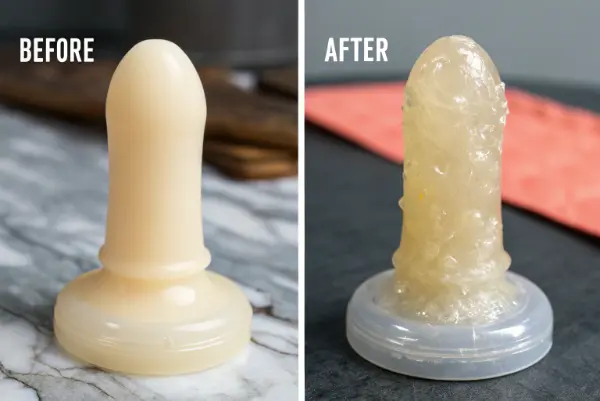
This is a critical topic for us at PrivyPlay. We use premium medical-grade silicone for our products because it is non-porous and safe. However, chemistry is chemistry. The rule of thumb in our industry is "like dissolves like." Since petroleum jelly is a hydrocarbon and silicone is a polymer that can be vulnerable to certain oils, a reaction occurs. When petroleum jelly sits on a silicone toy, it begins to break the bonds of the material.
I recall a specific case with a client in Europe. He was sourcing a high-end rabbit vibrator from us. After three months, he complained that customers were saying the ears of the rabbit were turning into a "gummy bear" texture. We investigated. We found out he was cross-selling petroleum-based "massaging balms" alongside the toys. The oil in the balm was reacting with the silicone.
When silicone breaks down, two bad things happen. First, the physical integrity is lost. It feels gross and sticky. Second, and more importantly, the surface is no longer smooth. It develops microscopic pits and craters. You cannot see them with the naked eye, but bacteria can hide there. No amount of washing will get that bacteria out. So, if a customer uses Vaseline once, ruins the surface, and uses the toy again later, they are introducing bacteria directly into their body. This leads to the infections we discussed earlier. As a brand owner, you must put warning labels or instructions on your packaging: "Do not use with oil-based lubricants."
What do experts and scientific studies say?
Marketing claims often confuse consumers, but scientific data tells the truth. There are many myths about what is safe for the body. To build trust with your customers, you need to rely on evidence-based medicine and expert consensus, not just internet forums.
Medical experts and gynecologists almost universally advise against using petroleum jelly internally. A key study involving 141 women specifically identified petroleum jelly use as a strong predictor for developing Bacterial Vaginosis, reinforcing that it disrupts the natural vaginal flora.

The study I mentioned earlier from the University of California, San Francisco, is one of the most cited pieces of evidence. They followed women and tracked their habits. The data was clear. Women who used oil-based products internally had a much higher rate of infection. It is not just about one study, though. It is about the consensus of the medical community.
Gynecologists see the results of this misuse daily. They report that patients often do not disclose they are using petroleum jelly because they think it is harmless. They treat the infection, but the patient goes home, uses the jelly again, and the infection returns. This creates a cycle of poor health. Experts point out that the vagina is self-cleaning. It produces its own lubrication. When you introduce a heavy, occlusive agent, you stop that process.
Furthermore, from a toxicology standpoint, while the jelly itself is non-toxic if swallowed in small amounts, it is not designed for the vaginal environment. The "purity" of the jelly matters too. Cheaper, non-brand petroleum jellies might not be refined as well, potentially containing contaminants. But even the purest "white petrolatum" is physically problematic. As a sourcing manager, knowing these facts helps you create better FAQ sections for your website. It allows you to position your brand as an expert. You are not just selling fun; you are selling safe, educated fun.
Key Expert Takeaways:
- Disruption: It alters the pH balance.
- Retention: It stays in the body too long.
- Incompatibility: It ruins barrier methods (condoms) and devices (toys).
What are the safe alternatives for lubrication?
If we tell customers what not to use, we must also tell them what they should use. There are excellent options on the market that enhance pleasure without the risks. Recommending the right products can actually increase your average order value and customer satisfaction.
The best alternatives are high-quality water-based or silicone-based lubricants. Water-based lubes are compatible with all toys and condoms and wash off easily, while silicone lubes last longer but cannot be used with silicone toys. Natural plant oils like coconut oil are popular but still carry some risks for condom use.
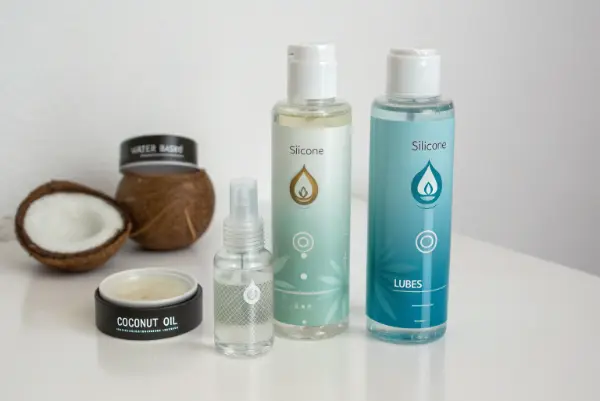
At PrivyPlay, when we consult with brand owners, we always suggest they offer a "bundle" or "starter kit" that includes a sample of water-based lubricant. This steers the customer in the right direction immediately.
Let’s break down the options so you can advise your customers correctly:
1. Water-Based Lubricants:
This is the gold standard for versatility. It is safe to use with latex condoms, polyisoprene condoms, and 100% of sex toys (silicone, glass, metal, stone). It mimics the body’s natural moisture. The downside is that it can dry out faster than oil, so one might need to reapply. However, clean-up is instant—just warm water. It leaves no stains on sheets.
2. Silicone-Based Lubricants:
These are great for water play (shower or bath) because they do not wash away. They feel very silky and last a long time. However, you cannot use them with silicone toys. Since most high-quality toys are silicone, this is a major limitation. If your store sells primarily silicone vibrators, you should be very careful about selling silicone lube to the same customer unless they know the rules.
3. Oil-Based / Natural Options (Coconut Oil):
Some customers want "all-natural" solutions. Coconut oil is popular. It smells good and feels nice. However, it has the same problems as Vaseline regarding latex condoms—it will break them. It can also clog pores, though it is generally less heavy than petroleum jelly. It is also not safe for latex toys, though it might be okay for solid silicone (check the manufacturer’s rating).
4. Hybrids:
There are water-silicone hybrids (usually creamy) or oil-water hybrids. These can be tricky. Always check the ingredients. If the first ingredient is water, it is usually toy-safe, but always test a small patch.
By guiding your customers to water-based options, you protect their health and the longevity of the products you sold them. It is a win-win situation.
Conclusion
Petroleum jelly is a great product for dry skin, but it has no place in the bedroom. It poses significant health risks like Bacterial Vaginosis, destroys latex condoms, and permanently ruins silicone sex toys. As industry professionals, we must educate our customers to use water-based lubricants to ensure safety, pleasure, and product longevity.