
As a brand owner, you know customer discretion is non-negotiable. A noisy adult product can lead to embarrassment and negative reviews, damaging your brand’s reputation. Understanding the science behind quiet toys is key to delivering the privacy your customers expect and trust.
The sound level of an adult toy is determined by its material composition. Hard, dense materials like ABS plastic transmit motor vibrations easily, creating a louder, higher-pitched sound. In contrast, soft, flexible materials like body-safe silicone absorb and dampen these vibrations, converting the energy into tiny amounts of heat. This process significantly reduces the overall noise, resulting in a quieter, deeper rumble.
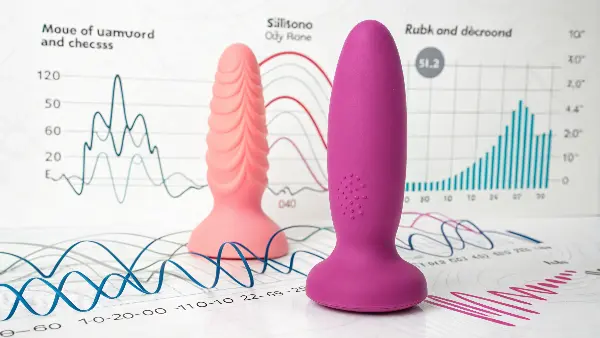
It seems simple on the surface: soft materials are quiet, and hard materials are loud. But as a manufacturer, I can tell you there’s a lot more nuance to it. The specific type of material, its thickness, and how it’s combined with other components all play a critical role. To truly master silent product design, we need to look closer at the choices we make in sourcing and construction. Let’s break down exactly how these factors work together.
How Do Different Materials Actually Change the Sound a Toy Makes?
You’ve probably noticed that toys made with different materials sound completely different, even with the same motor inside. This isn’t an accident. Choosing the wrong material can turn a sleek design into a loud, buzzing distraction, making your sourcing process feel like a gamble. But understanding how materials shape sound gives you the power to make informed decisions.
Materials change the sound a toy makes by altering how vibrations travel through them. Hard materials like plastic transmit vibrations efficiently, often resulting in a high-pitched buzz. Softer materials like silicone act as a natural filter, absorbing high frequencies and allowing lower ones to pass through. This creates the deep, quiet rumble that customers prefer and associate with premium quality.
From my experience in the factory, this is where product design becomes an art. It’s not just about picking one material; it’s about how you use its properties. A motor creates vibrations across a wide range of frequencies. The materials encasing that motor determine which of those frequencies the user actually hears and feels.
The Role of Density and Hardness
The first principle to understand is that sound is just vibration traveling through a medium. In a toy, the motor is the source of the vibration.
- Hard, Dense Materials: Think of ABS plastic, which is often used for the internal housing that holds the motor. It’s rigid and dense, so it transfers vibrational energy very efficiently with little loss. This means the vibrations pass right through it, creating a sharp, often loud sound.
- Soft, Less-Dense Materials: Body-safe silicone is the perfect example. Its molecular structure is more flexible. When vibrations from the motor hit the silicone, the material flexes and moves, converting that vibrational energy into a tiny amount of heat. This process is called "damping," and it’s the primary reason silicone is so quiet. It essentially muffles the sound before it ever leaves the product.
Material Combinations for Silence
The quietest toys almost always use a combination of materials. We typically build an internal chassis from rigid ABS plastic to hold the motor and electronic components securely in place. This prevents the motor from rattling around, which would create a lot of extra noise. Then, we over-mold a thick layer of soft, low-durometer silicone around this chassis. The ABS provides stability, while the silicone casing absorbs the vibrations, creating a product that is both powerful and exceptionally quiet.
| Material | Typical Hardness | Resulting Sound Profile | Common Application in Toys |
|---|---|---|---|
| ABS Plastic | High (Shore D 75-90) | Sharp, High-Pitched Buzz | Internal motor housing, buttons, skeletons |
| Body-Safe Silicone | Low (Shore A 10-50) | Deep, Low-Pitched Rumble | External body, sleeves, user-contact surfaces |
| TPE/TPR | Very Low to Medium | Soft Hum, Can Rattle | Budget-friendly toys (less damping than silicone) |
| Glass / Metal | Extremely High | Clear, Resonant Buzz | Niche dildos and wands (relies on motor isolation) |
By carefully selecting and combining these materials, we can engineer the exact sound profile a product has—turning a potentially loud device into a discreet and luxurious experience.
Why Are Soft Materials So Good at Reducing Noise?
We all know that silicone is the gold standard for premium, body-safe adult toys. But its benefits go beyond safety and feel. One of its most valued qualities is its ability to be incredibly quiet. As brand owners, you see "whisper quiet" as a key marketing claim, but you might wonder what makes it possible. The answer lies in the unique physics of soft materials.
Soft materials excel at noise reduction because of a property called internal damping. Their flexible molecular structures are designed to move and deform when hit with vibrational energy from a motor. This movement creates internal friction, which converts the sound energy into negligible heat, effectively stopping the noise from ever reaching the air. That is why a thick silicone toy feels powerful yet sounds quiet.
When I walk through our production facility and see the raw materials, the difference is obvious even before manufacturing. A block of hard plastic feels inert and solid. A sheet of platinum-cured silicone, however, feels alive and absorbs energy. If you tap on it, the sound is dull and short. This inherent ability to "eat" sound is what we harness to build quiet products for our partners. It’s a deliberate engineering choice that separates high-end toys from cheap knock-offs.
The Science of Damping Explained
To get a little more technical, sound is mechanical energy. For a toy to be loud, that energy needs to travel from the motor, through the toy’s body, and into the air as sound waves. Soft materials interrupt this journey.
- Vibration Meets a Flexible Structure: When the motor vibrates, it pushes against the inner wall of the silicone casing.
- Energy Conversion: Instead of passing this push directly through like a rigid material would, the flexible polymer chains in the silicone stretch and rub against each other. This microscopic friction generates a tiny, unnoticeable amount of heat.
- Energy Loss: The energy that is converted to heat is no longer available to become sound. This process, known as viscoelastic damping, is extremely effective at muffling the higher-frequency sounds that our ears perceive as an annoying "buzz." What’s left is the low-frequency vibration, which is felt as a deep "rumble."
Durometer and Its Impact on Sound
Not all silicone is created equal. One of the most important specifications I discuss with clients is durometer, which is the measure of a material’s hardness.
- Softer Silicone (lower durometer, e.g., Shore 00-50): This silicone is very squishy and flexible. It has excellent damping properties and is fantastic at absorbing sound. This is what we use for the outer layers of ultra-quiet toys. The trade-off is that it can sometimes feel too soft or "jiggly" if not supported by a firmer structure.
- Firmer Silicone (higher durometer, e.g., Shore A 20-40): This silicone offers a balance between softness and structural integrity. It still provides very good sound damping but holds its shape better. It’s a versatile choice for many products, delivering a premium feel without sacrificing quietness.
Ultimately, the choice of durometer allows us to fine-tune the final product. By wrapping a motor in a thick layer of low-durometer silicone, we can create a product that delivers powerful vibrations to the user with minimal sound escaping into the room.
How Does Sound Travel Differently Through Various Materials?
You’re sourcing a new product and have two prototypes: one made of TPE and another of silicone. They use the identical motor, yet one is noticeably louder. This happens because sound transmission is fundamentally different depending on the material it passes through. Ignoring this can lead you to approve a product that fails to meet your customers’ standards for discretion.
Sound, which is simply vibration, travels through materials differently based on their density and elasticity. Dense, rigid materials like plastic or metal transmit vibrations quickly and efficiently, acting like a bridge for sound. Softer, more elastic materials like silicone impede and absorb these vibrations. This forces the sound energy to dissipate, making them poor transmitters and excellent insulators for noise.
I’ve had many conversations with brand founders who are trying to reduce costs by opting for a cheaper material like TPR instead of silicone. On paper, it seems like a small change. But I always caution them by explaining the trade-offs, and sound is one of the biggest. The way a material handles energy is central to the user’s experience. It’s the difference between a product that feels cheap and one that feels luxurious and private.
The Mechanics of Sound Transmission
Think of atoms in a material as a line of dominoes.
- In Solid, Rigid Materials (like ABS plastic, metal): The atoms are packed tightly together. When a vibration (the first domino) hits one side, it quickly knocks over the next one, and the energy wave travels rapidly through the material to the other side with very little loss. This is why you can hear a tap on one end of a metal pipe so clearly at the other end. These materials are good conductors of sound.
- In Soft, Porous Materials (like silicone): The atoms are part of long, flexible polymer chains with more space between them. When a vibration hits, the chains stretch and move instead of just immediately transferring the impact. This movement creates friction and converts the energy to heat. The "domino" effect is weak and dies out quickly. These materials are poor conductors (or good insulators) of sound.
A Practical Comparison for Adult Toys
Let’s apply this to materials you encounter every day when sourcing.
| Material Type | Energy Transmission | Sound Profile | Why It Matters for Your Brand |
|---|---|---|---|
| Body-Safe Silicone | Poor. Absorbs vibrations through internal damping. | Muffled, Low-Frequency Rumble. Perceived as quiet and powerful. | The premium choice for discreet, high-end toys. Justifies a higher price point. |
| Glass / Metal | Excellent. Transmits vibrations with high fidelity. | Clear, Resonant Buzz. Can be loud if motor isn’t isolated well. | Offers a different sensation. Success depends on isolating the motor with silicone gaskets to prevent the whole toy from vibrating loudly. |
| ABS/Hard Plastic | Excellent. Transmits vibrations very efficiently. | Loud, High-Frequency Buzz. Perceived as "cheap" or "buzzy." | Best used for internal structures only, not for the main body of a vibrating toy. The noise will frustrate users. |
| TPE/TPR | Moderate. Some damping, but less effective than silicone. | Louder Hum than Silicone. A middle ground, but a noticeable step down in quality. | A common choice for budget products, but your "whisper quiet" claims will be harder to justify. |
Understanding this is crucial. When a factory suggests using TPE to save a few dollars, you now know that you’re not just changing the material—you’re fundamentally altering the product’s acoustic properties. For a brand built on quality and discretion, that’s a compromise that is rarely worth making.
Conclusion
In summary, the quietness of an adult product is not magic; it’s a direct result of thoughtful material science. By using soft, damping materials like silicone to encase motors, we can absorb vibrations and engineer a discreet experience that builds customer trust and elevates your brand.