
The adult toy market is changing fast. Customers now care deeply about the planet and want products that reflect their values. If you ignore this shift, you might lose a large group of loyal buyers. We must address the environmental impact of our industry right now.
Yes, eco-friendly manufacturing is the future. It involves using sustainable materials like bio-plastics and body-safe silicone that lasts for years. It also means using green energy in factories and reducing plastic waste in packaging. This approach protects the environment and helps your brand grow.
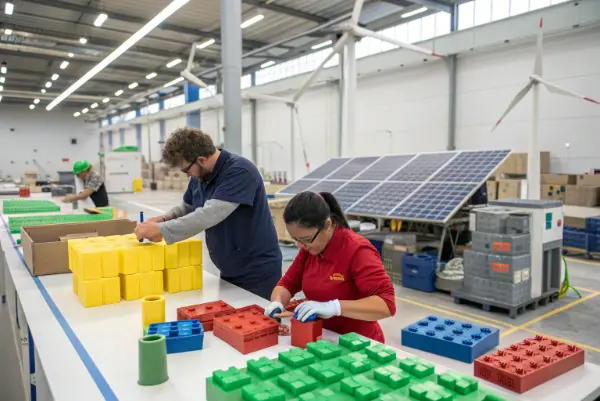
I have spent many years in this industry. I see the waste that traditional manufacturing creates. It is not sustainable. But I also see a new path. Brand owners ask me every day about green options. They want to know if it is possible to be profitable and responsible. The answer is yes. In this article, I will share how we can make adult toys better for the world. I will explain the materials, the processes, and the benefits for your business.
What Sustainable Materials Can Replace Traditional Plastics?
Plastic pollution is a huge global crisis. Your customers feel guilty when they buy products made of cheap, disposable plastic. You need to offer them a better, guilt-free choice.
Bio-plastics made from cornstarch or recycled materials are excellent alternatives to traditional petroleum plastics. However, high-quality medical-grade silicone remains the best choice for adult toys. It is durable, non-toxic, and safer for the body, which means the product lasts longer and does not end up in a landfill quickly.
When we talk about materials, we have to look at the full picture. Many people think "eco-friendly" just means biodegradable. But in the adult toy industry, safety and durability are just as important as being biodegradable. If a toy breaks after two months, it becomes trash. That is not sustainable.
I always tell my clients at PrivyPlay that medical-grade silicone is the king of materials. It comes from silica, which is found in sand. It is not a petroleum-based plastic. While it does not rot in the ground like an apple, it is very chemically stable. It does not degrade into harmful microplastics in the ocean as easily as cheap TPE or Jelly toys do.
We are also seeing a rise in bio-based plastics for the hard parts of toys, like the handles of wands or the casing of vibrators. These plastics come from renewable resources like corn or sugarcane. They perform just as well as ABS plastic but have a much lower carbon footprint.
Here is a simple breakdown of material options:
| Material Type | Sustainability Factor | Durability | Best Use Case |
|---|---|---|---|
| Medical-Grade Silicone | High (Long lifespan, silica-based) | Excellent | Insertable parts, soft layers |
| Bio-Plastics (PLA) | High (Renewable source) | Good | Hard casings, handles |
| Recycled ABS | Medium (Reusing waste) | Very Good | Internal mechanics, controllers |
| TPE/TPR | Low (Often short lifespan) | Low | Budget toys (Not recommended) |
You must choose materials that align with your brand’s message. When I source materials, I check for safety certifications first. A green material is useless if it harms the user. We focus on durability because a toy that lasts five years is better for the planet than five toys that break in one year.
How Does the Manufacturing Process Impact the Environment?
Factories use a massive amount of electricity and water. You might worry that your supply chain is contributing to climate change. This is a valid concern for any responsible business owner.
Sustainable manufacturing reduces impact by using energy-efficient injection molding machines and solar power. It also recycles scrap material directly on the factory floor so nothing is wasted. Smart water cooling systems recyle water instead of dumping it, which drastically lowers the factory’s resource consumption.
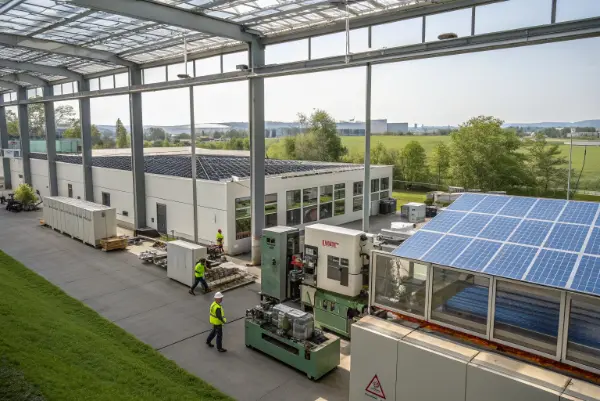
The material is only half the story. The way we make the product matters just as much. In the past, factories were dirty and wasteful places. Today, modern manufacturing is much cleaner. I have worked hard to optimize our processes to reduce waste.
One major area is energy consumption. Injection molding machines require a lot of heat to melt silicone or plastic. Old machines waste a lot of heat. Newer, all-electric machines are much more efficient. They use power only when they move. This cuts energy use by a large percentage. At PrivyPlay, we look for ways to use renewable energy, like solar panels on the roof, to power these machines.
Another big issue is material waste during production. When you mold a toy, there is often extra material left over. This is called the "runner" or "sprue." In a bad factory, this is thrown away. In a sustainable factory, we use a "re-grind" process for thermoplastics. We take that extra scrap, grind it up, and put it back into the machine immediately. For silicone, it is harder because you cannot re-melt it once it is cured. That is why we use "cold runner" systems. These systems keep the silicone liquid until it hits the mold cavity. This means there is almost zero waste.
Water is also crucial. Machines need cooling. We use closed-loop water systems. The water circulates, gets cooled down, and goes back to the machine. We do not constantly pull fresh water from the city supply. This saves thousands of gallons of water every year.
Here are the key process improvements:
- Cold Runner Systems: Reduces silicone waste.
- Closed-Loop Cooling: Saves water.
- Electric Machines: Saves electricity.
- Lean Manufacturing: Reduces movement and logistics waste.
Can Sustainable Packaging Make a Real Difference?
Most adult toys come wrapped in layers of useless plastic. This looks cheap and ends up in the trash immediately. It hurts your brand image with eco-conscious customers.
Yes, packaging is the easiest and most visible way to show you care. Switching to FSC-certified paper, soy-based inks, and plastic-free boxes makes a huge impact. Minimalist packaging also reduces the size of the box, which means you can ship more units in one go, lowering your carbon footprint.
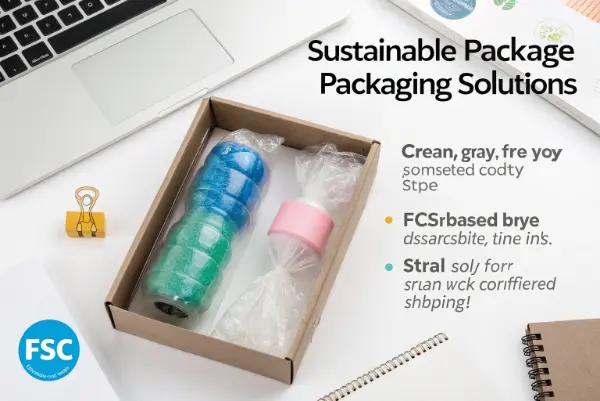
I often see brands focus heavily on the product but forget the box. The first thing your customer touches is the packaging. If they see a lot of plastic blister packs and Styrofoam, they feel disappointed. It feels wasteful.
We encourage our clients to use paper-based solutions. Cardboard is easy to recycle. We look for FSC-certified paper. This means the wood came from a responsibly managed forest. It proves that we are not destroying ancient forests to make boxes.
Ink is another hidden factor. Standard inks contain petroleum and heavy metals. Soy-based inks or vegetable inks are much better. They are bright, high-quality, and do not leave toxic residues. They make recycling the paper easier.
The design itself is also a tool for sustainability. I recall a client who had a very large box for a small vibrator. It was mostly empty air. We redesigned the box to be snug and compact. This did two things. First, it used less paper. Second, it allowed them to fit 30% more units on a shipping pallet.
This reduction in volume is critical for logistics. Shipping is a major source of carbon emissions. If you ship air, you are wasting fuel. By making the packaging smaller, you reduce the number of planes and trucks needed to move your goods. This saves you money on shipping and helps the planet.
Consider these changes:
- Remove Blister Packs: Use paper inserts to hold the toy.
- Use Biodegradable Bags: If you need a wrap, use cornstarch bags.
- Print Smart: Use QR codes for manuals instead of thick paper booklets.
- Right-Size the Box: Do not ship air.
Will Eco-Friendly Manufacturing Hurt Your Profit Margins?
You might think that going green is too expensive. You worry that higher costs will eat into your profits. You fear you cannot compete with cheaper brands.
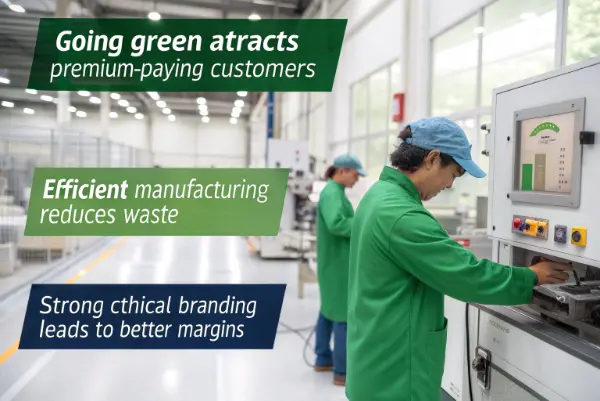
While raw sustainable materials can cost slightly more, the long-term value is much higher. Green products attract customers who are willing to pay a premium price. Also, efficient manufacturing reduces waste, which saves money. In the end, a strong, ethical brand creates loyal customers and better margins.
This is the most common question I get. "Jerry, this sounds great, but can I afford it?" I understand the pressure on margins. I deal with costs every day. But you have to look at the total cost, not just the unit price.
Yes, bio-plastic might cost a few cents more per unit than cheap ABS. Yes, medical-grade silicone is more expensive than TPR. But let’s look at the returns.
First, there is the "Green Premium." Market research shows that modern consumers, especially millennials and Gen Z, prefer sustainable brands. They are willing to pay extra for a product that aligns with their values. You can price your product higher if you tell a true sustainability story. This offsets the material cost.
Second, consider the cost of returns and bad reviews. Cheap materials break. They smell bad. Customers return them. Returns kill your profit. High-quality, sustainable materials reduce returns. A happy customer buys again. Customer retention is cheaper than customer acquisition.
Third, look at the manufacturing savings I mentioned earlier. When we reduce waste in the factory, we save money on raw materials. When we pack smaller, you save money on shipping. These operational savings often balance out the higher material costs.
Let’s analyze the financial impact:
| Cost Driver | Short Term Impact | Long Term Benefit |
|---|---|---|
| Sustainable Materials | Cost increases slightly | Higher retail price, lower returns |
| Green Packaging | Cost varies (often similar) | Lower shipping costs, better branding |
| Efficient Process | Investment in tooling | Lower energy bills, less scrap waste |
| Brand Image | Requires marketing effort | High customer loyalty, differentiation |
You are not just buying a product; you are building a brand asset. In a crowded market, being the "clean" and "green" option is a powerful way to stand out.
How Do You Verify a Manufacturer’s Green Claims?
Many suppliers claim to be eco-friendly but do not follow through. This is called greenwashing. You do not want to risk your reputation on false claims.
You must demand valid certifications like ISO 14001, RoHS, and REACH. It is also vital to audit the factory or hire a third party to inspect it. A true partner will be transparent about their supply chain and let you see their waste management systems in action.

Trust is good, but verification is better. In my years sourcing and manufacturing, I have seen many factories that talk a big game. They say they recycle, but they dump waste out the back door. As a brand owner, you are liable if your product contains banned chemicals.
You need to ask for paperwork.
ISO 14001 is the international standard for environmental management systems. If a factory has this, it means they have a formal plan to reduce their environmental impact. They are audited on it.
RoHS (Restriction of Hazardous Substances) and REACH are essential for selling in Europe. They prove that your materials do not contain lead, mercury, or dangerous phthalates. If a supplier cannot provide these test reports from a reputable lab (like SGS or Intertek), run away.
But papers can be faked. The best way is to visit. When I walk through a factory, I look at the bins. Are they separating trash? Do they have a regrind machine next to the injection molder? Is the air clean? I look at their energy bills. I ask where they buy their silicone.
If you cannot visit China personally, hire a third-party inspection agency. Tell them to check for environmental compliance, not just product quality.
At PrivyPlay, we are open. We show our clients our material certificates. We explain our process. We know that your reputation depends on our honesty. Transparency is the only way to build a long-term partnership in this industry. Do not accept vague answers. Ask for proof.
Conclusion
The shift to eco-friendly manufacturing is not just a trend; it is necessary. By choosing sustainable materials, optimizing production processes, and using smart packaging, you build a better brand. It saves costs in the long run and attracts loyal customers. Let’s work together to make the industry cleaner.