
You want to enter the BDSM market, but you are worried about safety risks and poor quality materials. If you choose the wrong supplier or materials, your brand reputation could be destroyed overnight. This guide will explain exactly how to select safe materials, meet standards, and find products that sell.
To manufacture successful BDSM products, you must prioritize body-safe materials like platinum-cured silicone, vegetable-tanned leather, and medical-grade stainless steel. You also need to ensure compliance with international safety standards like REACH and FDA regulations while tracking the market shift toward "soft" BDSM and beginner-friendly luxury designs.
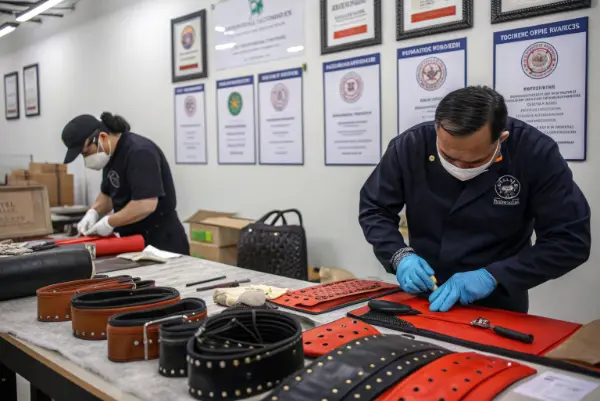
Many brand owners struggle to find the balance between durability and comfort in this niche. I have seen many companies fail because they ignored the technical details of production. In the following sections, I will break down the specific materials you should use, the safety tests you cannot ignore, and the current trends driving the market.
What Materials Are Safe and Durable for BDSM Gear?
Choosing materials is the most confusing part of product development for many new brand owners. If you use cheap plastic or toxic leather dyes, you risk harming your customers.
The safest materials for BDSM manufacturing are 100% platinum-cured silicone for toys, genuine vegetable-tanned leather for restraints, and 304 stainless steel for hardware. These materials are hypoallergenic, durable under stress, and free from harmful phthalates.
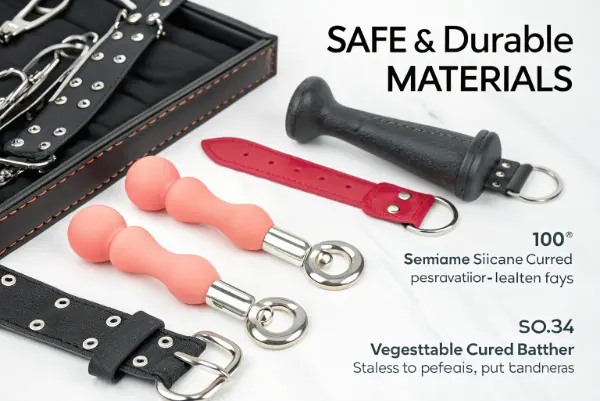
When we talk about BDSM products, material safety is not just about chemicals. It is also about physical strength. In my years of manufacturing at PrivyPlay, I have learned that "body-safe" means different things for different products. For impact toys and restraints, physical integrity is key. For insertables, chemical purity is number one.
Let’s look at silicone first. You will often see "liquid silicone" or "TPE" on the market. TPE is porous. It holds bacteria. For high-end brands, I always recommend platinum-cured silicone. It is non-porous and can be sterilized. It costs more, but it lasts longer.
For restraints like cuffs and collars, leather is the classic choice. However, cheap leather uses chromium tanning. This can cause skin allergies for sensitive people. Vegetable-tanned leather takes longer to make, but it is much safer for prolonged skin contact. If you want a vegan option, high-grade PU leather is acceptable, but it must be thick enough not to tear.
Hardware is often overlooked. The metal rings and clasps on cuffs must be strong. Zinc alloy is common because it is cheap, but it can break. Stainless steel (304 or 316 grade) is the gold standard. It does not rust, and it handles heavy loads without snapping.
Material Comparison Table
| Material Type | Best Application | Pros | Cons |
|---|---|---|---|
| Platinum Silicone | Plugs, Gags, Soft Toys | Non-porous, boil-safe, odorless | Higher raw material cost |
| TPE/TPR | Budget Toys | Very soft, cheap to produce | Porous, hard to clean, degrades fast |
| Veg-Tan Leather | Cuffs, Collars, Whips | Hypoallergenic, ages well, strong | Expensive, stiff initially |
| PU Leather (Vegan) | Beginner Kits | Consistent texture, cruelty-free | Can peel over time, less breathable |
| Stainless Steel | Clips, Chains, Spreaders | extremely strong, easy to clean | Heavy, requires precise machining |
I once had a client who wanted to save money by using nickel-plated iron for heavy-duty suspension hooks. I advised against it. During testing, the plating chipped, creating sharp edges. We switched to stainless steel immediately. You must think about the worst-case scenario when choosing materials.
Which Safety Standards Must Your Products Meet?
Regulations for adult products are getting stricter every year in Europe and the USA. If your products get stopped at customs because you lack the right paperwork, you lose money and time.
To sell globally, your BDSM products should generally comply with CE and RoHS standards in Europe, and satisfy REACH regulations regarding chemical makeup. In the US, materials must often meet Prop 65 requirements to ensure they are free from harmful carcinogens like lead and phthalates.
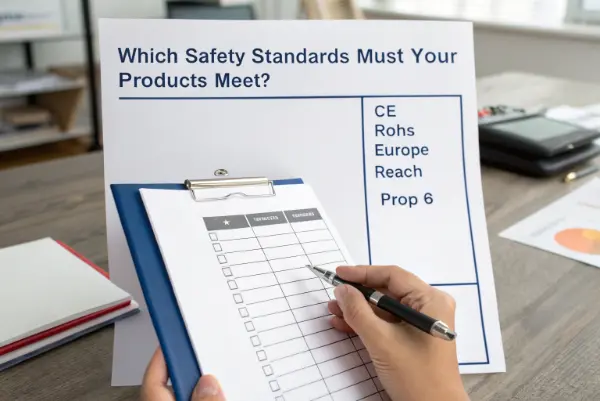
Safety standards fall into two categories: chemical safety and physical safety. Most brand owners focus on chemical safety, which is correct, but physical safety is equally important in the BDSM niche.
Chemical Safety:
The biggest enemy here is phthalates. These are chemicals used to make plastics soft. They are banned in many countries for products that touch the skin.
- REACH (Europe): This is very strict. It tests for a long list of Substances of Very High Concern (SVHC).
- Prop 65 (California/USA): This requires warning labels if your product contains certain chemicals. It is better to just formulate your product without them.
Physical Safety:
This is where BDSM manufacturing is unique. A vibrator does not need to hold a person’s weight. A suspension cuff does.
- Load Testing: We perform "pull tests" on restraints. If a cuff claims to be heavy-duty, we attach weights to see when the stitching pops or the metal ring bends.
- Locking Mechanisms: Buckles must release quickly in an emergency. We test the release time.
I remember a time when a supplier tried to pass off a batch of "leather" cuffs that were actually bonded leather (scraps glued together). Visually, they looked fine. But when we did a simple pull test, the layers separated. This would have been dangerous for a customer relying on that cuff. Now, at PrivyPlay, we test raw materials before production even starts.
Essential Compliance Checklist
| Region | Standard | Focus Area | Why it Matters |
|---|---|---|---|
| Europe | REACH | Chemical Composition | Ensures no toxic chemicals are in the material. |
| Europe | CE | Electrical/Safety | Required for any electronic BDSM gear (like e-stim). |
| USA | Prop 65 | Warning Labels | Protects you from lawsuits regarding toxic ingredients. |
| Global | ISO 10993 | Biocompatibility | Medical grade standard (great for marketing high-end toys). |
You need to ask your manufacturer for these test reports. Do not just take their word for it. Ask for a report from a third-party lab like SGS or TUV. If they cannot provide it, that is a red flag.
What Are the Current Market Trends and Demands?
You do not want to fill your warehouse with products that were popular five years ago. The BDSM market has changed from a dark, underground niche to a mainstream wellness category.
The current market demand is shifting heavily toward "Soft BDSM" and aesthetic-focused gear that looks like fashion accessories. Customers are looking for beginner-friendly kits, gender-neutral colors, and products that focus on sensual pleasure rather than just pain or restriction.
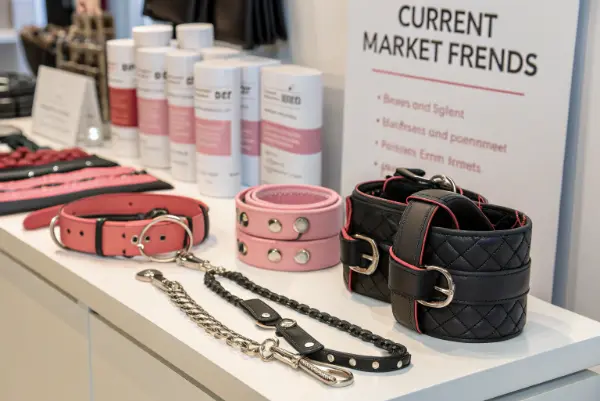
The influence of pop culture has changed how people view BDSM. It is no longer just about hardcore dungeons. It is about "spicing up" the bedroom. This means the design language of your products needs to change.
1. The Rise of "Soft BDSM":
Customers want to explore control and surrender without intimidation.
- Materials: Silk ropes, velvet linings, and soft silicone.
- Colors: We are moving away from only black and red. Pastels, navy blue, and rose gold hardware are selling very well.
- Packaging: It needs to look like a high-end cosmetic gift box, not a novelty item.
2. Inclusivity and Comfort:
Old designs were often made for one specific body type. Now, adjustable sizing is a must.
- Sizing: Cuffs that fit plus-size wrists and ankles are in high demand. "One size fits all" often fits no one well.
- Gender: Designs are becoming more neutral. A sleek leather collar appeals to everyone, regardless of gender.
3. Functional Jewelry:
This is a high-margin category. These are items that can be worn in public as accessories but function as BDSM gear.
- Examples: Chain chokers, heavy padlocks that look like necklaces, and discretion-focused day collars.
Market Trend Breakdown
| Product Category | Traditional Style | Modern Trend | Target Audience |
|---|---|---|---|
| Restraints | Heavy, industrial, rough leather | Padded, faux fur, velvet, ergonomic shapes | Couples, Beginners |
| Impact Toys | Severe whips, heavy canes | Sensory feathers, silicone paddles, crop ticklers | Wellness seekers |
| Masks/Hoods | Full enclosure, scary, latex | Open eyes, cat ears, breathable mesh | Cosplay fans, Light players |
| Kits | Cheap novelty packs | Curated luxury boxes with guides | Gift buyers |
At PrivyPlay, I have noticed that our inquiries for custom colors have doubled. Brand owners want a specific "brand color" for their silicone toys to stand out on Amazon. This customization is key. You cannot just sell the same generic black handcuffs as everyone else and expect to make a profit. You need a unique selling point, whether it is the color, the eco-friendly packaging, or the superior material quality.
How Do We Ensure Quality Control During Manufacturing?
If you are sourcing from overseas, you might worry that the final product will not look like the sample. Manufacturing defects can ruin your launch.
Quality control must happen at three stages: raw material inspection, mid-production checks, and final pre-shipment testing. You must define your tolerance levels for defects clearly, covering stitching quality, metal plating durability, and silicone surface smoothness.
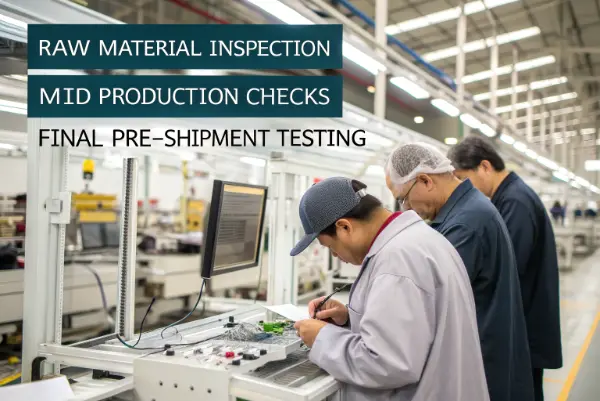
Quality control (QC) is not something you do at the end. It is a process that runs through the whole timeline. When I manage production, I treat QC as a partnership between the factory and the buyer.
Step 1: Raw Material Check (IQC)
Before we cut a single piece of leather or melt any silicone, we check the materials.
- Is the leather thickness consistent?
- Is the metal hardware free of scratches?
- If the raw material is bad, the product will be bad. There is no fixing it later.
Step 2: In-Process Quality Control (IPQC)
This happens while the goods are being made.
- Stitching: For BDSM gear, stitching is critical. A loose thread on a dress is annoying. A loose thread on a restraint is a safety hazard. We check for "back-stitching" to ensure ends are tied off.
- Molding: For silicone toys, we check for air bubbles or "flash" (excess material) on the seam lines. These need to be trimmed by hand.
Step 3: Final Inspection (FQC)
This is the last look before the box is sealed.
- Function Test: Does the buckle close smoothly? Does the snap button hold?
- Cleanliness: Is the product free of dust and oil?
- Smell Test: This is vital. BDSM gear should smell like leather or nothing. It should not smell like strong chemicals or glue.
QC Checkpoints for Specific Products
| Product Type | Critical Checkpoint | Common Defect to Avoid |
|---|---|---|
| Silicone Plugs | Surface smoothness | Parting lines (sharp ridges from the mold) |
| Leather Cuffs | Rivet strength | Rusted rivets or sharp edges on the back of rivets |
| Ropes | Fiber integrity | Fraying ends or chemical smell from dye |
| Metal Clamps | Spring tension | Too weak (slips off) or too strong (causes injury) |
I encourage you to be specific with your manufacturer. Do not just say "make it good quality." Say "no sharp edges over 0.5mm" or "silicone hardness must be 15 Shore A." The more specific you are, the less room there is for error.
Conclusion
Manufacturing BDSM products requires a strict focus on safety, material quality, and current market aesthetics. By choosing body-safe materials like platinum silicone and testing for physical durability, you protect your customers and your brand. Focus on the "soft" BDSM trend and ensure your quality control is rigorous to succeed in this growing industry.