
Creating a new vibrator line feels overwhelming. You worry about choosing the wrong materials, which could harm your customers and your brand’s reputation. This guide breaks down the essential choices you need to make, ensuring you develop a safe, high-quality, and successful product.
To manufacture a successful vibrator, focus on three key areas. Select body-safe silicone for materials, as it’s non-porous and hygienic. Choose a motor that balances power with noise, like a brushless motor for premium products. Understand that costs are driven by materials, motor complexity, design intricacy, and order quantity. Partnering with an experienced manufacturer simplifies this entire process.
As a brand owner or sourcing manager, your success depends on the quality of your products. I’ve spent years in this industry, and I’ve seen firsthand how a small choice in materials or components can make or break a product launch. This guide is built from that experience. It’s designed to give you the clarity you need to communicate effectively with your manufacturing partner and create a vibrator that your customers will love and trust. Let’s dive into the details that matter most.
Which Materials Are Best for Manufacturing a High-Quality Vibrator?
You’re ready to create a standout product, but the thought of using unsafe materials is a nightmare. A single bad review about a skin reaction could destroy your brand’s credibility. Don’t let material selection be a blind spot; making the right choice is fundamental to your success.
The best and most widely used material for high-quality vibrators is body-safe silicone. It is non-porous, hypoallergenic, easy to clean, and has a soft, premium feel. For internal components, ABS plastic is a common choice for its durability and rigidity. Avoid materials like TPR, PVC, or jelly, as they can be porous and may contain harmful phthalates. Always prioritize safety and quality.
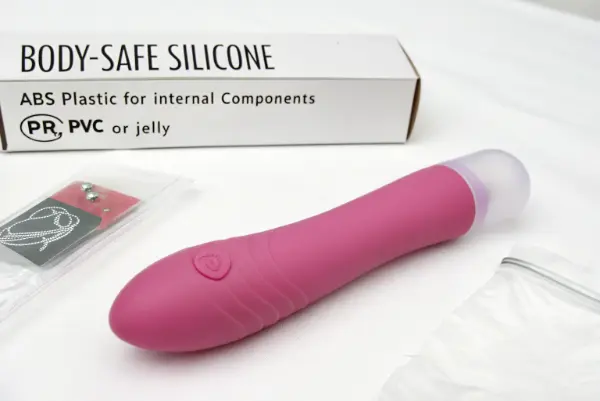
The material you choose is the first thing your customer will see and feel. It directly impacts their safety, their experience, and their perception of your brand. I remember working with a new brand that wanted to cut costs by using a cheaper TPE (thermoplastic elastomer). We created a prototype, and while it looked okay, it had a slight chemical smell and felt sticky. We strongly advised them to switch to medical-grade silicone. The final product was more expensive to produce, but it felt amazing, was completely body-safe, and earned rave reviews for its quality feel. That initial investment in better material paid for itself many times over.
Comparing Common Vibrator Materials
Choosing the right material is a balance of safety, feel, durability, and cost. Body-safe silicone is the industry standard for a reason, but understanding the alternatives helps you make an informed decision.
| Material | Key Features | Pros | Cons | Best For |
|---|---|---|---|---|
| Body-Safe Silicone | Hypoallergenic, non-porous, soft | Very safe, premium feel, easy to clean | Higher cost, can’t be used with silicone lube | Premium external vibrators |
| ABS Plastic | Rigid, durable, lightweight | Cost-effective, strong structure | Hard texture, not for external skin contact | Internal skeletons, handles, control buttons |
| Glass | Non-porous, temperature play | Very hygienic, elegant look, heats/cools | Fragile, heavier, can be expensive | Dildos and toys focused on temperature play |
| Metal (Stainless Steel) | Non-porous, weighty, durable | Very hygienic, premium weight, temp play | Expensive, cold to the touch initially | High-end luxury wands and dildos |
Material Safety Certifications
Your customers trust you to provide a safe product. Don’t just take a manufacturer’s word for it. Always ask for documentation proving the materials are body-safe. Look for certifications like RoHS (Restriction of Hazardous Substances) and FDA approval for the specific grade of silicone used. This protects your customers and your business.
How Do Different Motor Types Affect Vibrator Performance and Cost?
Your design is sleek and your material is premium, but the vibration feels weak or sounds like a lawnmower. A poor motor can make a beautiful product feel cheap and ineffective, leading to disappointed customers and bad reviews. You need a motor that delivers the right experience.
Different motors create vastly different user experiences. Coreless motors are a cost-effective standard for many toys, offering decent power. Brushless motors are quieter, more powerful, and last longer, making them ideal for premium products but at a higher cost. F1 motors provide deep, rumbly vibrations instead of buzzy ones. Your choice directly impacts performance, sound, longevity, and final cost.
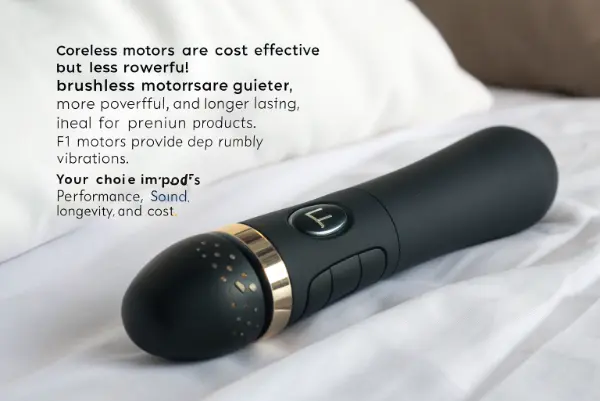
The motor is the heart of your vibrator. Its performance defines the product’s primary function. I’ve tested hundreds of prototypes over the years, and the difference a motor makes is incredible. A brand once came to us with a competitor’s product they wanted to improve. The original toy was buzzy and loud. By simply upgrading it to a newer, slightly more expensive brushless motor, we created a prototype that was whisper-quiet and produced a deep, satisfying rumble. The perceived value of the product skyrocketed. Your choice of motor isn’t just a technical detail; it’s a core part of your brand’s promise to the customer.
Understanding Motor Specifications
When discussing motors with a manufacturer, a few key terms will come up. Understanding them helps you specify exactly what you need.
- RPM (Revolutions Per Minute): This measures speed. Higher RPMs often mean a more intense, "buzzy" vibration. A typical range for vibrators is 6,000 to 12,000 RPM.
- Torque: This refers to the motor’s rotational force. Higher torque can produce a "deeper" or "rumblier" vibration that doesn’t stall when pressed against the body.
- Noise Level (dB): A critical factor for discreet use. Brushless motors are generally much quieter than their brushed counterparts. A good target for a "quiet" vibrator is under 50 dB.
A Quick Motor Comparison
Let’s break down the most common options to help you decide.
| Motor Type | Typical Use Case | Key Advantage | Key Disadvantage |
|---|---|---|---|
| Coreless Brushed Motor | Entry-level to mid-range vibrators | Good balance of cost and performance | Louder, shorter lifespan than brushless |
| Brushless Motor | Premium and luxury vibrators | Very quiet, powerful, long-lasting | Significantly higher cost |
| F1 Motor | "Rumbly" vibrators, wands | Creates deep, powerful vibrations | Can be more expensive and larger |
| Linear Resonant Actuator (LRA) | High-tech, patterned toys | Creates complex, nuanced patterns | More complex to implement, higher cost |
Ultimately, your motor choice should align with your product’s market position. For an affordable, mass-market toy, a coreless motor is fine. For a luxury product where quiet operation and deep rumbles are selling points, investing in a brushless or F1 motor is essential.
What Really Determines the Final Cost of Manufacturing a Vibrator?
You have a great idea for a vibrator, but you have no idea what it will cost to produce. You’re worried about getting an inflated quote or, worse, a price so low it signals poor quality. Understanding the cost structure is key to budgeting properly and negotiating effectively.
The final manufacturing cost of a vibrator is determined by several key factors. These include the cost of raw materials (silicone is pricier than TPE), the type and quality of the motor, the complexity of the design and mold, the electronics (PCBA) for different functions, battery capacity, and your total order quantity (MOQ). Labor and packaging also contribute to the final unit price.
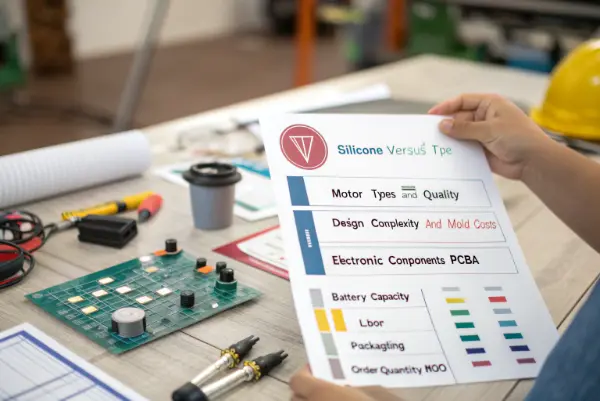
Breaking down costs is something I do every single day. Many clients are surprised to learn that the motor isn’t always the most expensive part. Often, the mold is the biggest upfront investment. A complex, multi-part design requires a more intricate and expensive mold than a simple, single-piece shape. I once worked on a project with a very unique, ergonomic shape. The mold cost was nearly double that of a standard bullet vibrator. However, that unique design became the product’s main selling point. You have to think of costs not just as expenses, but as investments in the features that will make your product desirable.
Key Cost Drivers in Detail
Let’s look closer at where your money goes. Understanding these components will help you have more productive conversations with potential manufacturing partners.
- Tooling (Mold Cost): This is a one-time setup fee to create the steel mold for your product’s silicone and plastic parts.
- Simple Design: A basic bullet vibrator mold might cost a few thousand dollars.
- Complex Design: A multi-part, intricate design could cost $10,000 or more.
- Unit Cost Components: This is the price per vibrator.
- Materials: Body-safe silicone can cost 2-3 times more than cheaper alternatives like TPE.
- Motor: A premium brushless motor might add several dollars to the unit cost compared to a standard coreless motor.
- Battery: A higher-capacity Li-ion battery costs more but offers longer use time, a key selling feature.
- PCBA (Printed Circuit Board Assembly): A simple board with 3 modes is cheaper than a complex one with 10 patterns and app connectivity.
- Labor: More complex assembly requires more time and skilled labor, increasing the cost.
- MOQ (Minimum Order Quantity): Higher order volumes spread the fixed costs (like mold setup and machine calibration) over more units, which significantly lowers the price per unit. A small order of 500 units will have a much higher unit cost than an order of 5,000 units.
When you request a quote, a good manufacturer should be able to provide a transparent breakdown of these costs. This helps you see where you can potentially adjust features to meet your target price without sacrificing essential quality.
How Can You Find a Reliable Manufacturing Partner for Your Vibrator Brand?
You’ve designed your product and know your specs, but you’re anxious about finding a manufacturer. You hear horror stories of missed deadlines, poor quality control, and partners who disappear after receiving payment. Choosing the right partner is the most critical decision you’ll make.
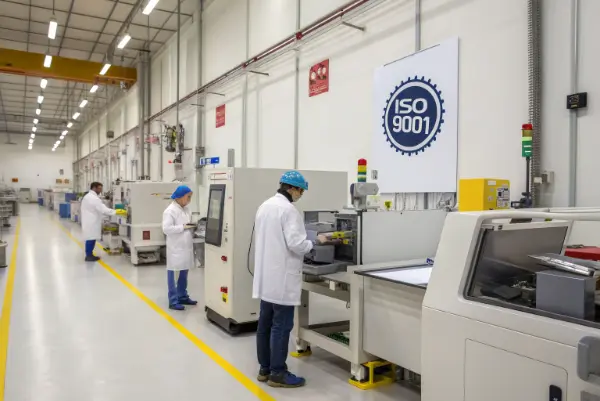
To find a reliable vibrator manufacturer, look for a partner with extensive industry experience, not just a general factory. Verify their quality certifications (like ISO 9001) and material safety reports. Prioritize clear communication and responsiveness. A great partner acts as an advisor, helping you optimize your design for manufacturing and offering transparent pricing. Start with a small trial order to test their quality and process.
Finding the right partner is about more than just finding the lowest price. It’s about finding a team that becomes an extension of your own. I believe our role at PrivyPlay is not just to make products, but to guide our clients through this complex process. A few years ago, a wellness brand came to us after a terrible experience with another supplier. Their products were failing at a high rate, and they were losing money and customer trust. We didn’t just give them a new quote. We walked them through a complete product teardown, identified the weak points in the original design, and proposed a more durable internal structure and a better motor. It rebuilt their confidence and, more importantly, their brand.
Checklist for Vetting a Manufacturer
Don’t leave this to chance. Use a structured approach to evaluate potential partners. A trustworthy partner will welcome your questions and provide clear answers.
- Industry Specialization: Do they specialize in adult products? A general electronics factory won’t understand the specific needs for body-safe materials, waterproofing, and user experience. Ask to see examples of similar products they have manufactured.
- Quality Management Systems: Do they have certifications like ISO 9001? This indicates they have standardized processes for maintaining quality. Ask about their QC (Quality Control) process. How many checkpoints are there? At what stages do they test the products?
- Communication and Transparency: Are they responsive and easy to communicate with? Do they speak your language fluently? A good partner will provide regular updates and be transparent about potential challenges and costs.
- Engineering and Design Support (DFM): Do they offer Design for Manufacturability (DFM) feedback? A great partner won’t just build what you send them; they will analyze your design and suggest improvements to enhance durability, reduce cost, or improve performance.
- Social and Ethical Audits: Can they provide audits like BSCI (Business Social Compliance Initiative)? This ensures they treat their workers ethically, which is increasingly important for brand reputation.
Choosing a manufacturer is a long-term commitment. Take your time, do your research, and trust your gut. The right partner will be invested in your success because it is also their success.
Conclusion
Navigating the world of vibrator manufacturing requires a focus on material safety, motor performance, and cost management. By prioritizing body-safe silicone, choosing a motor that fits your brand’s promise, and understanding cost drivers, you can create a superior product. The most crucial step is finding a reliable partner.